
The Alchemist: The Most Trusted Ear in Hip-Hop
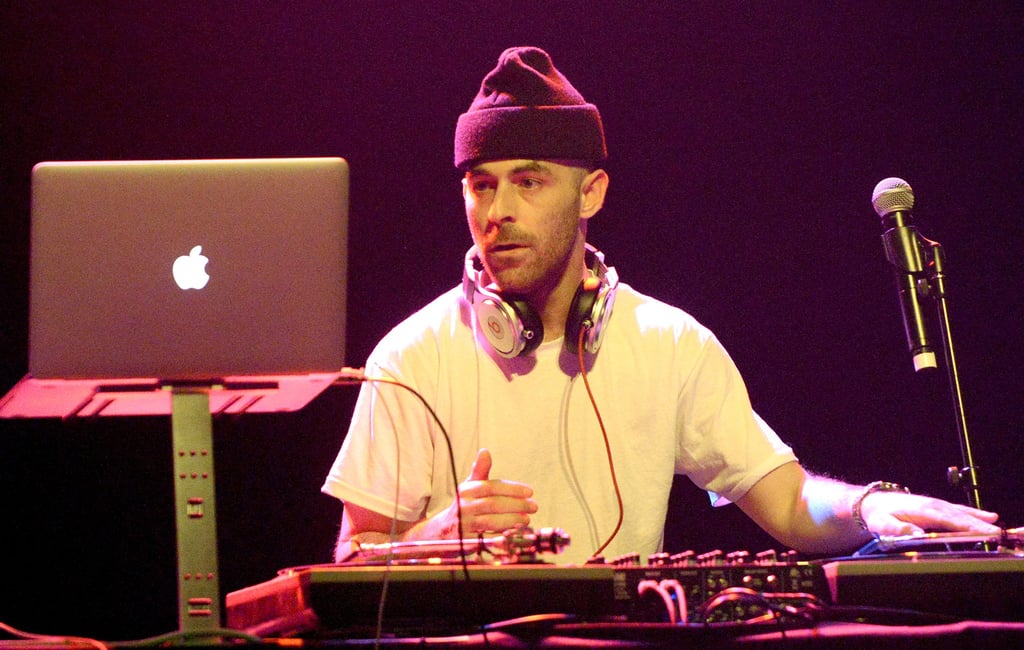
The Alchemist built one of the most respected catalogues in hip-hop production from Beverly Hills to the world using an Akai MPC and an ear nobody else has. Here is the story of the man behind the beats.
THE CULTURE
Will
5/28/20264 min read
The Culture | FlyAssLife
Beverly Hills is not where you expect the story to start.
Alan Daniel Maman grew up there — genuinely, in the zip code, the schools, the whole geography of west Los Angeles privilege — and emerged from it as The Alchemist, one of the most critically respected and artist-trusted producers in the history of hip-hop. The distance between those two facts is the whole story, and it is a story about taste, about obsession, and about a man who understood earlier than most that the way you hear things is worth more than the circumstances you heard them in.
He kept the Akai MPC. Through every technological evolution in music production, through the shift to digital audio workstations that rendered the hardware sampler functionally obsolete for most producers, The Alchemist kept the MPC. Not out of nostalgia — out of conviction. The machine does what he needs it to do in a way that nothing else replicates, and he has never once confused upgrading with improving.
The Ear
Production is curation before it is creation. The producer's first job is selection — finding the record, the sample, the fragment of sound that contains something worth building around. This requires listening to more music than is strictly healthy, developing a memory that files things by feeling rather than genre, and cultivating the ability to hear potential in something that most people walk past.
The Alchemist has been doing this since he was a teenager in Los Angeles, crate digging through record stores with the focused intensity of someone who understands that the inventory is finite and the right record might not be there next week. He developed relationships with musicians across genres — jazz, soul, film scores, international music — that fed a sample palette that sounds like nothing else in the genre because it comes from sources nobody else was mining.
The result is a catalogue that spans thirty years, multiple generations of hip-hop, and an artist list that reads like a who's-who of the genre's most respected voices: Mobb Deep, Eminem, Nas, Prodigy, Action Bronson, Freddie Gibbs, Boldy James, and now Erykah Badu, whose forthcoming album he's producing — a collaboration that signals both his range and the trust that the best artists in the culture have placed in his judgment.
The Akai MPC and the Refusal to Let Go of What Works
The Akai MPC60 arrived in 1988, designed by Roger Linn, and immediately changed how hip-hop was made. The ability to sample, chop, and sequence in one machine — to feel the music physically through the pads rather than program it through a keyboard — gave producers a tactile relationship with their material that software has never fully replicated.
Virtually every major producer of The Alchemist's generation moved away from the hardware as the software got better and faster and more capable on paper. The Alchemist did not. The MPC remains central to his process because the process that produced his catalogue was built on it and he is not interested in solutions to problems he doesn't have.
This is a specific kind of wisdom that gets undervalued in a culture obsessed with the new: knowing the difference between a tool that shaped your voice and a tool that merely works. The MPC shaped his voice. Everything else just works.
The Gibbs Trilogy and the Late Career Peak
If there is a defining chapter in The Alchemist's catalogue it is the trilogy of albums with Freddie Gibbs: Fetti, Bandana, and Alfredo. Alfredo in particular — released in 2020, winning the Grammy for Best Rap Album — is one of those records that sounds immediately classic, that exists in a complete world from the first track to the last, that demonstrates what happens when a producer and an MC achieve a genuine creative symbiosis rather than a transactional collaboration.
Alfredo sounds like a Sunday afternoon in a room with good wine and better records. It sounds unhurried because it is — two artists who trust each other completely, making something for themselves first and the audience second, with the confidence that comes from knowing that the audience worth having will find it. The more recently released Alredo 2 only expands on their symbiosis more.
It is, in the language of this site, fly. Deliberately, unambiguously, architecturally fly.
Beverly Hills to Everywhere
The biographical detail of Beverly Hills matters not because it defines him but because the distance from it does. The Alchemist could have stayed comfortable. The access was there, the safety net was real, the path of least resistance was paved and visible.
He chose the crates instead. He chose the MPC, the obsession, the decades of work that looked from the outside like a niche career and from the inside like the only possible life. He built his reputation in a genre that did not require his background and did not forgive mediocrity, purely on the strength of what he heard and how he translated it.
Now Erykah Badu trusts him with her album. Eminem has trusted him for twenty years. Nas trusts him. The most discerning ears in the culture trust him.
That trust is not given. It is built, slowly, over a career's worth of decisions made with taste rather than strategy. The Alchemist is proof that the long game, played with genuine conviction, reaches places that no shortcut can find.
The Culture is FlyAssLife's lens on the art, music, and creators who define what fly actually looks like.
#FlyAssLife
Reach out on our socials @FlyAssLife. Embrace living the #FlyAssLife.
Contact
join flyasslife. no spam, just the good stuff.
will@flyasslife.com
©FlyAssLife 2026. All rights reserved.