
The G-Wagon: Every Reason It Shouldn't Work and Why None of Them Matter
The Mercedes-Benz G-Wagon defies every rule of modern automotive logic and costs $150,000 doing it. Here is why that is entirely the point.
IRON & STEEL
Will
6/11/20263 min read
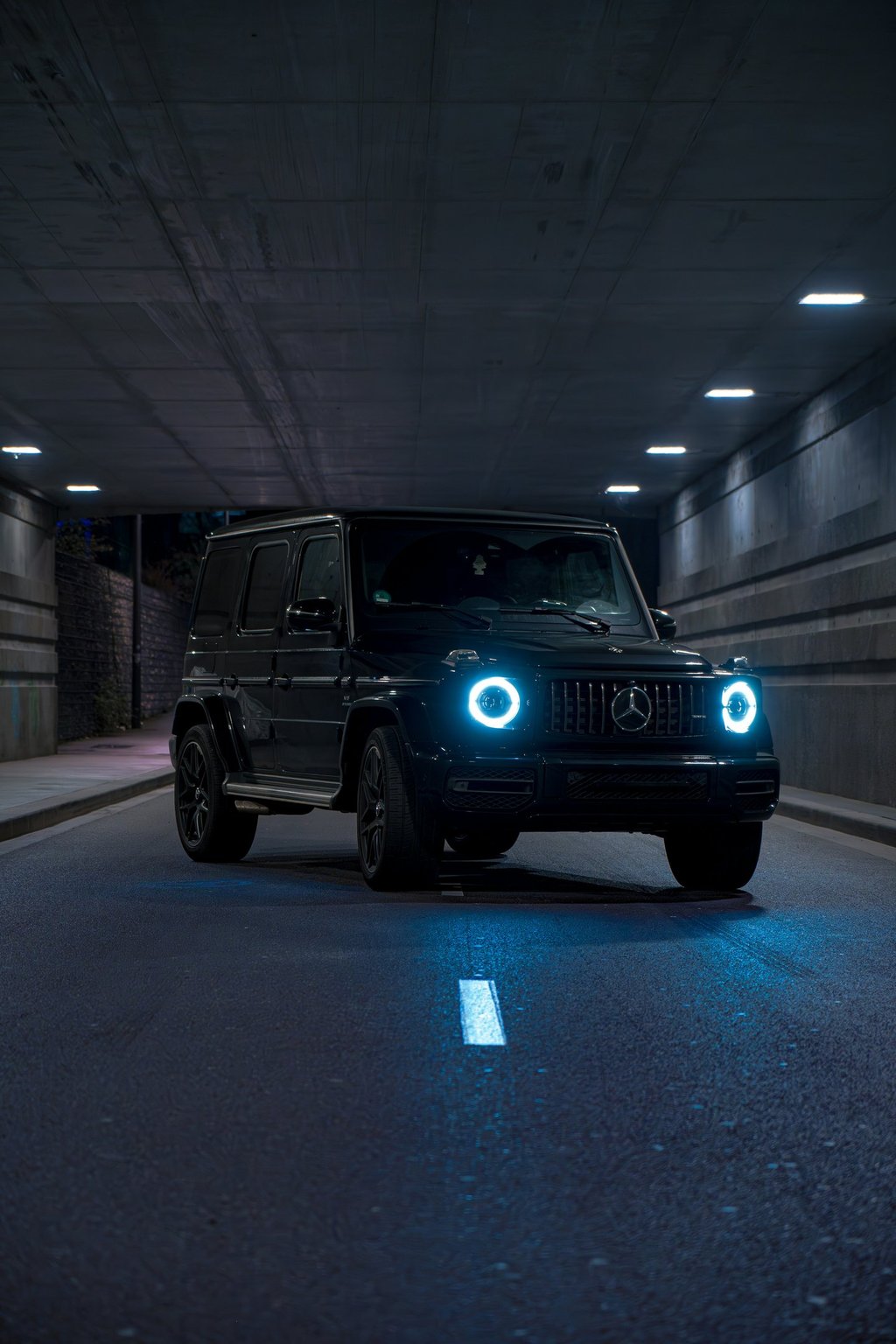
Iron & Steel | FlyAssLife
On paper, the Mercedes-Benz G-Wagon is an absurdity. It is a box. Not box-adjacent, not boxy in the way that designers use the word to mean strong and architectural — an actual, literal, right-angle box, with the aerodynamic profile of a small building and the fuel "efficiency" to match. It weighs nearly six thousand pounds. The side mirrors alone are roughly the size of a pizza box. The turn radius will humble you in parking structures.
It has been built on essentially the same platform since 1979. The original Geländewagen — cross-country vehicle, for those keeping score on the German — was developed for military applications, commissioned jointly by Mercedes and the Shah of Iran, who wanted something his army could actually drive through difficult terrain. Pope John Paul II used one. Armies across four continents used them. They were built to take punishment in conditions where anything more refined would come apart.
The current AMG G63 starts at around $175,000, gets fifteen miles per gallon on a good day, and is among the most visibly impractical vehicles available at any price point on the modern luxury market.
Naturally, there is a waiting list.
The Logic of the Illogical
Arnold Schwarzenegger encountered the G-Wagen during his time in the Austrian military and spent the better part of a decade lobbying Mercedes to bring a civilian version to the United States. He eventually bought one of the first available. This is relevant not because of who Schwarzenegger is but because of what he understood: that the G-Wagen's refusal to be anything other than exactly what it was constituted its own kind of integrity.
In a market crowded with luxury SUVs that attempt to be everything — athletic, refined, efficient, imposing, understated, all at once — the G-Wagon has never attempted anything of the kind. It is imposing. Period. It is not trying to flatter you with a low roofline or a swooping silhouette or a weight figure that competes with sedans. It is a vehicle that arrived as itself nearly fifty years ago and has declined every invitation to become something more palatable since.
Mercedes has, over the decades, improved what happens underneath the body — the current twin-turbocharged 4.0-liter V8 producing 577 horsepower in the G63 is categorically different from what was under the hood when it originated — while leaving the exterior philosophy essentially untouched. The three locking differentials remain. The ladder-frame construction remains. The door closing sound, which has been described as a bank vault being sealed and which Mercedes has actively preserved through acoustic engineering, remains.
They kept the door sound. On purpose. That is the level of commitment to identity we are dealing with.
What It Means on the Street
The cultural weight of the G-Wagon is by now well established — it has appeared in more rap videos, on more celebrity Instagram feeds, and in more high-net-worth driveways than perhaps any other single vehicle. This has led some to dismiss it as a status object stripped of authenticity, a choice made for optics rather than conviction.
This reading is wrong, and it misunderstands what status objects actually are at their best.
The G-Wagon became a cultural touchstone not because marketing departments decided it should, but because enough people who had genuinely earned the freedom to choose anything looked at the options and chose this. Rick Ross owns several. So does Kylie Jenner. So does the managing partner of a private equity firm in Connecticut and a Bundeswehr officer and a cattle rancher in Montana who actually uses the locking differentials. When a vehicle means something across that range of lives, it has accomplished something that no amount of advertising budget can manufacture.
What the G-Wagon communicates is not wealth, exactly. Plenty of vehicles communicate wealth. What it communicates is indifference to the conventional calculus. A Porsche Cayenne is the rational choice. A Range Rover is the refined choice. The G-Wagon is the choice that says: I considered rationality and refinement and decided I wanted the thing that came out of a military spec in 1979 and still hasn't bothered to change its face.
That is a particular kind of confidence. The market has priced it accordingly.
Behind the Wheel
The G63 moves with a violence that its dimensions do not prepare you for. Zero to sixty in 4.5 seconds — the number seems wrong until the moment it isn't, until you've pressed the accelerator and felt six thousand pounds of German engineering decide to become urgent. The exhaust note, which AMG has tuned to communicate intention rather than discretion, handles the announcement.
High-speed handling is not the point and was never meant to be. The point is the sensation of controlling something enormous and capable and entirely unconcerned with your opinion of it. It is the vehicular equivalent of a conversation with someone who knows exactly what they're about and sees no reason to adjust for the room.
You either find that compelling or you don't. The ones who do tend to understand it immediately.
---
Model: Mercedes-AMG G63
Engine: 4.0L twin-turbo V8
Power: 577 hp / 627 lb-ft torque
0-60: 4.5 seconds
Starting price: ~$175,000 USD
MPG: 13 city / 16 highway (not the point)
Verdict: The box that broke every rule and rewrote them.
Iron & Steel is FlyAssLife's ongoing series on the watches and cars worth knowing, owning, and obsessing over.
#FlyAssLife
Reach out on our socials @FlyAssLife. Embrace living the #FlyAssLife.
Contact
join flyasslife. no spam, just the good stuff.
will@flyasslife.com
©FlyAssLife 2026. All rights reserved.